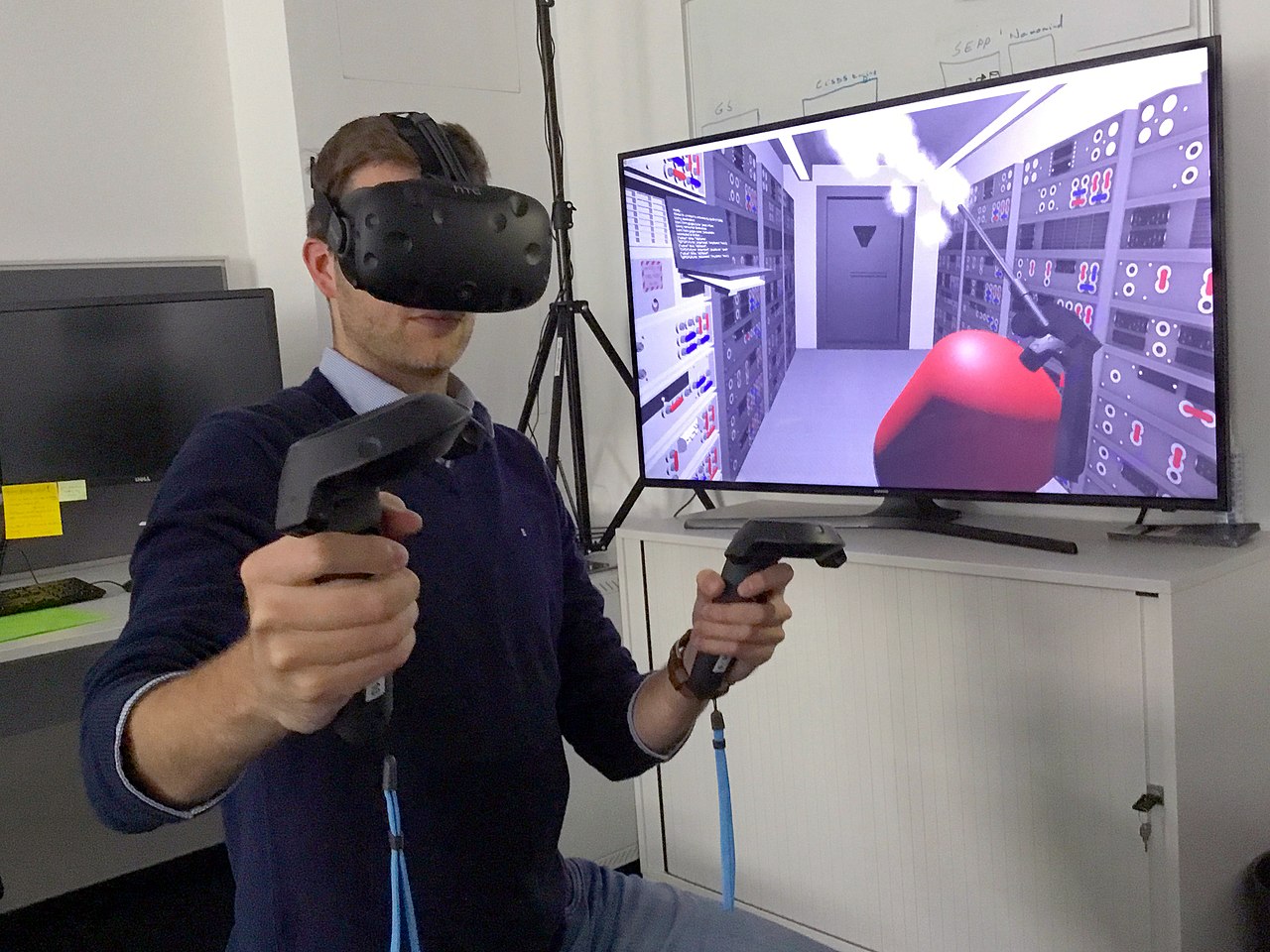
Virtual Reality Explained: How VR Tricks Your Senses into New Worlds
Imagine stepping through a portal into another dimension – a meticulously crafted digital realm where gravity feels different, impossible creatures roam, or a familiar landscape is rendered with stunning new details. This isn't science fiction anymore; it's the promise and reality of
Virtual Reality (VR). At its core, VR is a technological marvel designed to profoundly alter our perception of reality by presenting our senses with an entirely fabricated environment. It's about more than just viewing a screen; it's about feeling present in a different world, convincing your brain that what you're experiencing is real, even when it's entirely digital.
What Exactly is Virtual Reality? Deconstructing the Concept
The term "Virtual Reality" itself offers a fascinating clue to its nature. "Virtual" denotes something that is near or almost true, while "reality" refers to our lived experience. Thus, virtual reality can be understood as "near-reality" or a reality that is closely simulated but not physically present. Our entire understanding of the world around us is constructed from a constant influx of sensory information processed by our brains. We commonly cite our five basic senses – sight, hearing, touch, taste, and smell – but humans possess a far richer array of sensory inputs, including balance (vestibular sense), spatial awareness (proprioception), and temperature perception. These inputs, combined with our brain's sophisticated interpretive mechanisms, paint the vivid picture we call reality.
The fundamental principle behind VR hinges on this sensory dependency. If technology can effectively intercept and replace the sensory data our brains usually receive from the physical world with fabricated information, our perception of reality shifts. We begin to experience a simulated world as if it were genuinely present. In technical terms,
Virtual Reality describes a three-dimensional, computer-generated environment where a user can not only explore but also interact with elements within that digital space. The user becomes an active participant, immersed within this virtual world, capable of manipulating objects or performing actions as if they were truly there. This profound sense of "being there" is what distinguishes VR from traditional media.
The Sensory Symphony: How VR Manipulates Perception
Achieving a truly convincing virtual experience is a complex feat, demanding meticulous synchronization of multiple sensory stimuli. Our brains are incredibly adept at detecting discrepancies; even a slight mismatch between visual and auditory cues, for instance, can shatter the illusion. This is where concepts like "immersiveness" and "realism" become critical metrics for VR experiences. The technology must account for human physiology and perception to create a seamless, believable digital world.
*
Vision: The cornerstone of most VR experiences. High-resolution displays are placed directly in front of the eyes within a headset, providing a wide field of view that encompasses much of our natural peripheral vision. Crucially, these displays often provide stereoscopic vision – slightly different images to each eye – to create the depth perception inherent in real-world viewing. Advanced VR systems strive for high refresh rates and low latency to ensure smooth motion and immediate response to head movements, preventing jarring disorientations.
*
Hearing: Spatial audio is paramount. Instead of simple stereo sound, VR aims for 3D audio, where sounds appear to originate from specific locations within the virtual environment, changing volume and direction as the user moves. This enhances the sense of presence and helps ground the user in the digital space.
*
Touch (Haptics): While still evolving, haptic feedback devices, such as specialized gloves or controllers, can simulate tactile sensations like vibrations, textures, or even resistance. Imagine feeling the recoil of a virtual weapon or the texture of a digital fabric – these inputs significantly deepen immersion.
*
Movement and Balance: Motion tracking is key, allowing the system to accurately map the user's head and body movements into the virtual world. This naturalistic interaction, coupled with devices like omni-directional treadmills, can allow users to walk or run in a virtual space without leaving their physical location. Minimizing latency between real-world movement and virtual feedback is crucial to prevent motion sickness, a common challenge when visual and vestibular senses are misaligned.
The challenge lies in orchestrating these sensory inputs into a finely tuned symphony that tricks the brain into suspending disbelief. When successful, the result is a powerful sense of presence, blurring the lines between the physical and the digital. For a deeper dive into the technological marvels that make these experiences possible, explore
Behind the Screen: How VR Technology Creates Immersive Realities.
Beyond the Game: Diverse Applications of Virtual Reality
While video games often come to mind first when discussing
Virtual Reality, its influence stretches far beyond entertainment. VR is rapidly integrating into countless sectors, reshaping how we learn, work, and interact.
*
Gaming and Entertainment: This remains a huge driver for VR adoption. From immersive role-playing games to interactive narratives and competitive esports, VR offers unparalleled levels of immersion that flat-screen gaming cannot match. Imagine stepping directly into the shoes of your favorite character or exploring fantastical worlds with a sense of genuine presence.
*
Healthcare and Medicine: VR is revolutionizing medical training, allowing aspiring surgeons to practice complex procedures in a risk-free environment. It's also used for pain management, distracting patients during uncomfortable treatments, and in therapy for phobias, PTSD, and anxiety by creating controlled, safe environments for exposure therapy. Rehabilitation, particularly for stroke victims or those with mobility issues, benefits from engaging VR exercises.
*
Education and Training: From virtual field trips to ancient Rome to intricate simulations of the human body or complex machinery, VR offers unparalleled opportunities for experiential learning. Corporations use it for employee training, simulating dangerous scenarios for first responders or engineers, or providing realistic customer service simulations. This hands-on, immersive approach often leads to better retention and understanding.
*
Architecture and Design: Architects can walk clients through virtual renditions of unbuilt structures, allowing for detailed feedback and modifications before construction even begins. Product designers can prototype and test concepts in 3D, saving time and resources.
*
Retail and E-commerce: Imagine virtually trying on clothes, test-driving a car, or arranging furniture in your living room before making a purchase. VR is poised to transform online shopping by adding a crucial layer of experiential engagement.
*
Social and Communication: VR platforms are emerging as spaces for social interaction, allowing people from across the globe to meet, collaborate, attend virtual concerts, or participate in shared experiences in realistic avatars.
The ability of VR to create compelling simulated realities is unlocking new possibilities across almost every industry, proving that its utility extends far
Beyond Sci-Fi: Virtual Reality's Role in Shaping Our Daily Lives.
The Future of Immersion: What's Next for Virtual Reality?
Despite its impressive progress,
Virtual Reality is still in its nascent stages, facing challenges and pushing the boundaries of technological innovation. Current hurdles include the cost and weight of headsets, the desire for higher resolution and wider fields of view, and further reduction of motion sickness. However, ongoing research and development promise an even more seamless and integrated future.
Anticipated advancements include:
*
Lighter, More Ergonomic Headsets: Expect devices that are more comfortable for extended use, potentially resembling regular glasses.
*
Enhanced Visual Fidelity: Breakthroughs like foveated rendering (where only the area the user is directly looking at is rendered in full detail) and eye-tracking will drastically improve visual realism and efficiency.
*
Advanced Haptics and Full-Body Tracking: Beyond basic vibrations, future haptic suits and gloves could simulate pressure, temperature, and texture more accurately across the entire body, creating truly believable physical interactions.
*
Direct Brain-Computer Interfaces (BCIs): While futuristic, BCIs could one day allow users to control virtual environments directly with their thoughts, blurring the line between mind and machine.
*
Full Sensory Integration: Researchers are actively working on ways to stimulate senses like smell and taste in VR, though these remain particularly complex challenges.
For those looking to dip their toes into VR today, consider the ease of use and portability of standalone headsets versus the higher graphical fidelity offered by PC-tethered systems. Always try before you buy if possible, to find the experience that best suits your comfort and immersion needs. The rapid evolution of VR hints at a future where our digital and physical realities become increasingly intertwined, opening up possibilities we can only begin to imagine.
In conclusion,
Virtual Reality stands as a testament to human ingenuity, leveraging our sensory systems to craft entirely new worlds. By meticulously manipulating what our eyes see, our ears hear, and increasingly, what our bodies feel, VR tricks our senses into accepting a simulated reality as our own. From gaming and entertainment to life-saving medical training and transformative education, its impact is already profound and rapidly expanding. As technology continues to advance, VR promises to unlock dimensions of experience and interaction that will forever change how we perceive and engage with our world.